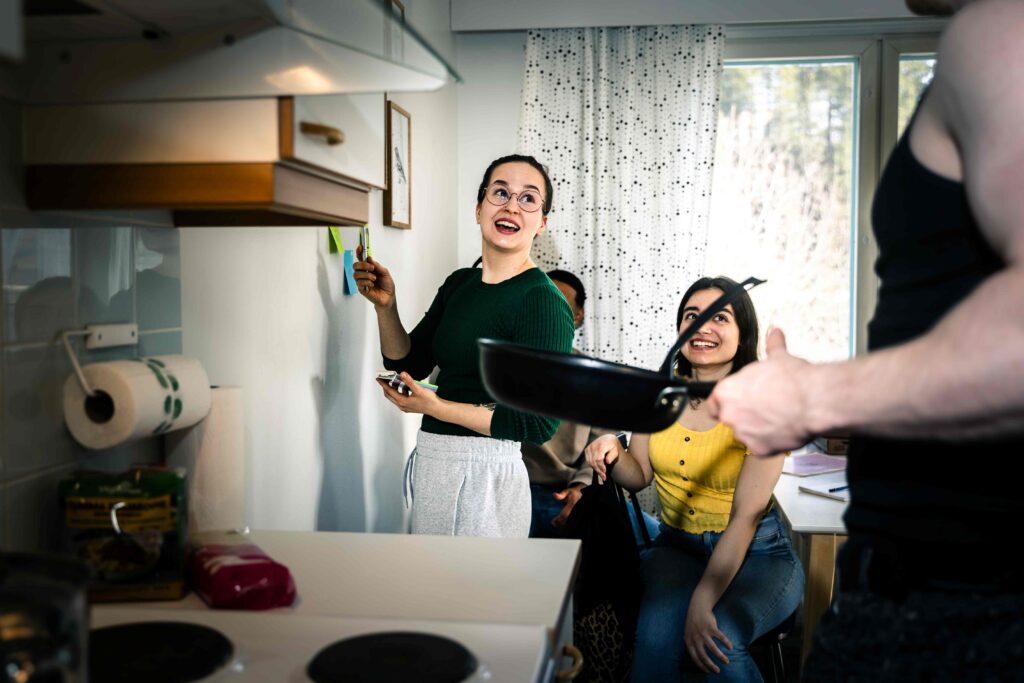
Salpakierto + LOK = improving sorting activity
Salpakierto and Lahden Talot LOK have launched a collaboration aimed at improving waste sorting awareness and recycling participation among students living in student housing. The new informational materials are designed to make waste sorting as easy and straightforward as possible, even for international students.
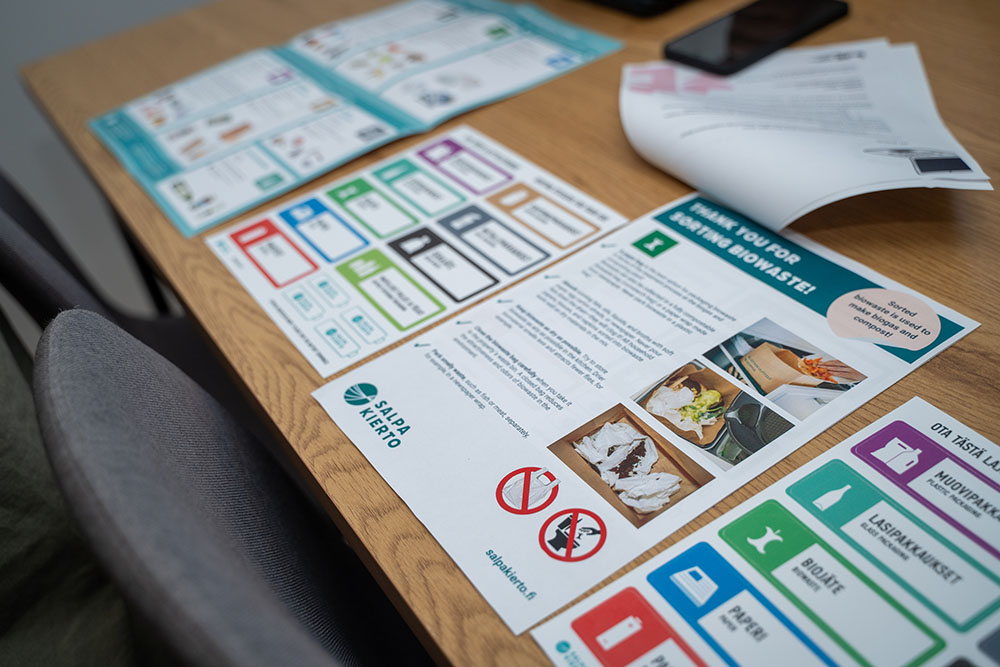
During the fall, English-language sorting instructions have been or will be delivered to approximately 650 student apartments to be placed in the apartment’s cleaning or trash closet, separate, motivational instructions focusing on organic waste sorting, a bundle of paper organic waste bags, and a cover letter from the property manager. Photo: Salpakierto Oy
Lahden Talot LOK student apartments are home to students from diverse backgrounds and cultures, where waste sorting practices may differ significantly from the Finnish system. For many residents, it is a new experience to sort household waste into several different categories and take it themselves to the building’s waste collection area. Even the sorting instructions may differ from what residents are accustomed to in their home countries due to the different waste management methods used.
The need for new informational materials arose from observations made in practice. Unsanitary conditions and sorting errors have been observed in waste collection areas, and, for example, a large number of plastic bags have ended up in organic waste bins, says Elina Rantanen, Sustainability Manager at Lahden Talot Oy. At some locations, the materials are distributed during apartment visits, while at newer student housing complexes, they are delivered through mail slots. Residents are also offered the opportunity to replace their kitchen trash bags as needed.
The goal is to lower the barrier to recycling and provide students with clear, easy-to-follow guidelines to help them in their daily lives. When sorting is done properly at home, waste collection areas stay cleaner and the composition of waste sent for recycling improves, says Hanna Bergman, Communications Manager at Salpakierto Oy. The campaign aimed to place special emphasis on organic waste, as separating it from mixed waste is particularly important. Separately sorted organic waste is used to produce biogas and soil amendments. When wet organic waste is mixed in with mixed waste, it contaminates the recyclable materials that are recovered during facility-based sorting.
To supplement the materials distributed to the apartments, we produced instructional videos in collaboration with local social media influencer Jade Ventoniemi. The instructional materials were produced in English so that they would be as accessible as possible to students from different countries.
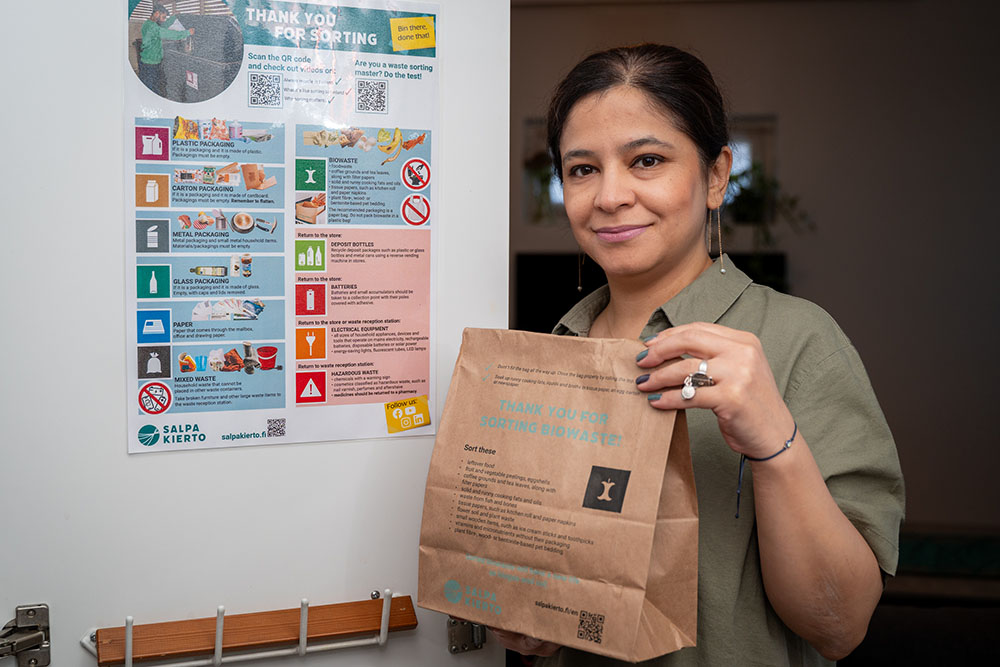
Somayeh Hosseinpour praises the clear instructions and well-organised waste collection on the property. Photo: Salpakierto Oy
New materials have already been delivered to the apartment of Somayeh Hosseinpour, who lives in Lahden Talot LOK student housing. She says she conscientiously sorts her waste into different categories. “It took a little while to get used to the system at first, but now sorting waste has become a natural part of my daily routine,” says Somayeh Hosseinpour.
The new sorting guidelines have been extremely helpful to me, especially because they are clear, illustrative, and easy to follow. The posters, online guides, and videos were especially helpful in helping me understand how the local recycling system works. I also like that the guidelines cover not only how to sort regular household waste but also where to take items such as batteries, returnable bottles, electronic devices, and other special types of waste. If I’m unsure about how to sort a particular item, I can easily check the guidelines online. All in all, the guidelines have made sorting much simpler and have increased my confidence that I’m sorting my waste correctly.
One thing I find easy about sorting waste in Finland is that many packages already have clear instructions on how they should be sorted. This makes it much easier to identify which waste category each product belongs to. I also find the waste collection system to be very efficient. My apartment building has separate collection bins for different types of waste, such as organic waste, plastic, cardboard, paper, glass, metal, and mixed waste. It’s convenient that all the collection bins are located in the same place and are clearly labeled.
Bringing recycling options closer to people’s homes and improving their accessibility always helps. In addition, clear, visual, and multilingual communication—especially for new residents and students moving into the area—is extremely helpful. “When people have a concrete understanding of the impact their recycling habits have on the environment, they are much more motivated to sort their waste properly,” concludes Somayeh Hosseinpour.
The impact of these measures is monitored through practical observations conducted at the waste collection shelters on college campuses. Special attention is paid to the overall cleanliness of the waste collection areas, the quality of sorting in the organic waste bins, and the use and filling of the bins. The goal is to reduce sorting errors and facilitate the proper sorting of organic waste.
The materials produced for the project are also freely available to other organizations and can be found on the Salpakierto website.